AI for healthcare
Deep learning for stroke diagnosis, breast cancer detection and multimodal imaging, built to be explainable, because a clinician has to be able to see why.
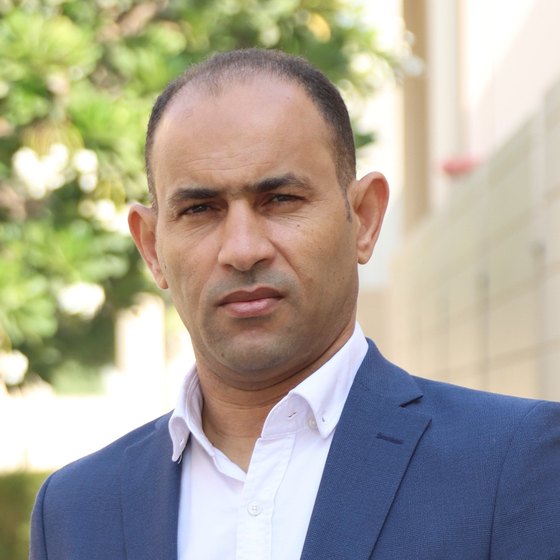
Associate Professor of Applied Mathematics · Qatar University
Artificial intelligence for medicine, agentic systems that act and not only predict, and the control theory that says whether they will hold. Teaching runs on the same conviction: a method is understood when you know where it comes from, when it applies, and what it looks like when it fails.
Our paper introduces SHARD, SHARD: Slot-based Hosted Addressable Residual Deltas for Sequential Knowledge Editing in Frozen Language Models, a slot-based method that keeps the base language model frozen and stores edits externally as addressable residual updates, using cosine similarity for routing so paraphrased versions of an edited fact are recognised even when activation magnitude changes. On CounterFact and zsRE with Qwen2.5 and TinyLlama, SHARD reaches 10x to 128x higher paraphrase generalization than GRACE while trading off some specificity preservation, and an ablation shows the advantage comes almost entirely from cosine routing: replacing it with Euclidean distance collapses paraphrase generalization by 14.6x and 113x in the two tested cells. The work also studies scaling across Qwen2.5 models from 0.5B to 7B parameters and introduces the SFIB benchmark for controlled evaluation of sequential knowledge editing.
Our paper "MaxVQA: A Large-Scale Multi-Source Dataset for Explanatory Visual Question Answering in Mammography" has been accepted for publication in the IEEE Journal of Biomedical and Health Informatics. Authors are Mohamed Mabrok, Yalda Zafari, Rehab Elsheikh, Rashad Mohamed and Essam A. Rashed.
Our paper "TomoMamba: A Two-Stage Model with State-Space Cross-Slice Propagation for Breast Cancer Diagnosis in Digital Breast Tomosynthesis" has been accepted for publication in Multimedia Tools and Applications. Authors are Shahd Soliman, Yalda Zafari, Essam Rashed and Mohamed Mabrok.
The single-authored paper "HamVision: Hamiltonian Dynamics as Inductive Bias for Medical Image Analysis" has been accepted in Medical Image Analysis (Elsevier), the flagship journal of the MICCAI community, and is among the first publications there from Qatar University. It embeds a damped harmonic oscillator as a bottleneck inside a vision model, reaching state of the art on 5/5 medical segmentation benchmarks and leading 8/9 MedMNIST classification tasks across 9 imaging modalities with far fewer parameters than transformer baselines.
I will be attending MICCAI 2026, Strasbourg, France, September 27 - October 1, 2026.
Our paper "Controllability Analysis for Vision State Space Models: A Structural Interpretability Framework" has been published in IEEE Transactions on Neural Networks and Learning Systems.
Deep learning for stroke diagnosis, breast cancer detection and multimodal imaging, built to be explainable, because a clinician has to be able to see why.
Systems that decide and act rather than only predict: agents that plan, use tools, hold a goal across many steps, and can be held to account for what they did.
Negative imaginary systems theory, robust stability, and feedback design for systems that ring, settle and interconnect.
Perception, navigation and online learning for UAVs and ground robots in environments that do not hold still.
Passivity of replicator dynamics, stability analysis, and how strategic agents settle into equilibria.
What a course looks like when every answer is machine checkable, the tutor has read the same pages the student has, and the record of a term is a dataset.
Everything, by year → · The same work in plain words →
Seven courses at Qatar University run on a platform built for them rather than bought: worked examples that stay closed until you have tried the problem, practice that explains rather than ticks, a tutor that has read the same pages the student has, and an exam bank where every answer has been re-derived by a computer algebra system before a student ever meets it.
How the teaching works → · Go to the courses →
Students interested in AI for healthcare, agentic AI, control theory or robotics are welcome to write. A CV and a short note about what you want to work on is much easier to answer well than a general enquiry.